Policy shapes patient care long before we ever enter the room. As medical students, we see what treatments are accessible, what resources are available, and what barriers stand in the way.
Even with that understanding, advocacy often felt distant. I knew it mattered. I didn’t know what my role in it could look like in a way that actually made a difference. As a medical student, it is easy for me to feel as though my place in medicine is to listen and to learn – to defer to those with more experience, more training, and more authority. In that space, it was hard for me to believe that my voice belonged in conversations about policy at all.
That perspective started to shift when I attended the American Medical Association Medical Student Advocacy Conference (MAC).

At MAC, I met with congressional offices to discuss national priorities like the REDI Act for student loan deferral and NIH funding for research. These conversations were grounded in policy, but what stood out to me most was not just the content of those discussions, but the people I was surrounded by.
I was in rooms filled with medical students from across the country, all there with a shared goal of strengthening our advocacy skills and learning how to translate our daily experiences into something larger. There was a sense of power in being in that space collectively, recognizing that the challenges we see in our clinical environments are not isolated and that we are not alone in wanting to address them.
We weren’t there because we had it all figured out. We were there learning how to care for patients while also witnessing, in real time, how systems succeed or fail them. Together, we were learning how to turn those observations into a voice.
We, as medical students, occupy a unique position in healthcare. In many ways, we stand in the middle. The patients we care for are the same people our legislators represent. We hear their concerns, we see the gaps in care, and we experience how policy decisions show up in exam rooms, clinics, and communities. Advocacy, in that sense, is not abstract; it is a way of carrying those patient experiences into spaces where decisions are made. In my meetings with the congressional offices, I saw that firsthand. What gave our voices weight wasn’t our level of training, but the patient experiences we brought with us. What mattered wasn’t how long we had trained, but how clearly we could speak to what their constituents are going through.
At MAC, I wasn’t learning what to believe. I was learning how to communicate—how to take experiences from medicine and translate them into something that policymakers could understand and act on. That skill, more than any single policy issue, was what stayed with me.
And it raised a more important question: what happens when we bring that skill back home?
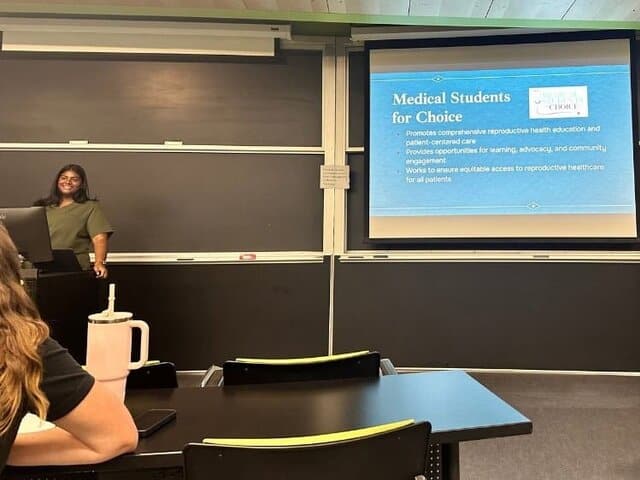
When I returned to Arizona, I wanted to make advocacy feel tangible not only for myself but also for other medical students. In collaboration with our school’s Health Advocacy and Policy Club, our Medical Students for Choice chapter organized a letter-writing campaign encouraging students to write to Arizona lawmakers in support of maintaining access to abortion care.
The goal was not just participation. It was translation.
We talked about how to take what we see and learn in medicine, from our clinical experiences to our understanding of patient barriers and real-world healthcare systems, and turn that into advocacy that feels grounded and specific. Writing to legislators can feel intimidating, but at its core, it is an extension of something we already do: observing, interpreting, and speaking on behalf of patient needs.
We also had the opportunity to hear from former Arizona State Representative Athena Salman, who spoke about the legislative process from the inside. Her perspective helped reinforce an important point: policymakers are listening, and are influenced by the voices of the communities they serve. As medical students, we are part of that community, bringing a perspective that is both informed and immediate.
With that in mind, students sat down and began writing. Some reflected on clinical encounters, others on what they had learned in the classroom, and many on the kind of physicians they hope to become. What stood out was not just that letters were being written, but that students were recognizing their ability to contribute.
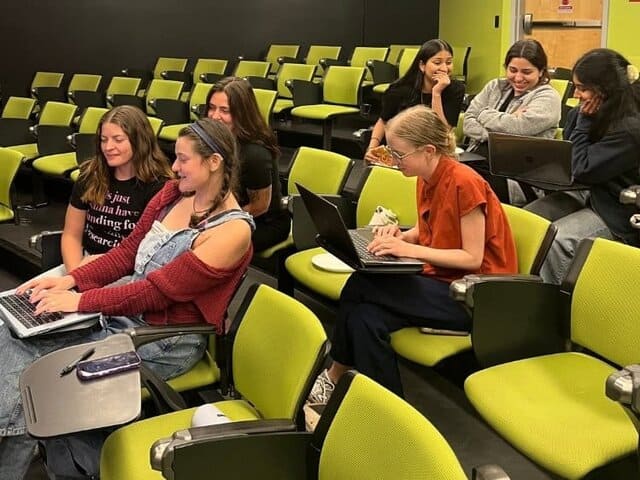
That moment highlighted two things for me. First, individual voices matter. Bringing students together to engage in advocacy creates something larger than any one letter. It builds a shared understanding that this work is part of our role in medicine and reminds us that we are not navigating these challenges alone. In that collective effort, even small actions begin to carry real momentum. Second, writing to legislators is not symbolic. It is one of the most direct ways we can help shape policy. When we speak from our experiences as medical students, we add something meaningful to those conversations.
Advocacy is often framed as separate from medicine, reserved for later in our careers or for those working at a policy level. Experiences like MAC and this letter-writing campaign have made it clear that it doesn’t have to be that way. We are already in a position to contribute. We are already seeing the effects of policy in patient care and developing the language to describe them. Advocacy is simply the next step, bringing those insights into the conversations that shape the systems our patients rely on.
For a long time, I thought my voice didn’t belong in those conversations, that I didn’t have enough experience, knowledge, or authority to contribute in a meaningful way. What I have come to understand is that the value of our voice as medical students is not in having all the answers. It is in what we see, hear, and carry with us from our patients into these spaces. Advocacy is not separate from the work we are already doing; it is a natural extension of it. We have to decide that our voice belongs.