On Saturday, 28th February 2026, I attended the Doctors for Choice UK Student Conference: “Abortion is Healthcare – An Introduction to Abortion Care for Healthcare Students” at the Clinical Skills Centre at the Royal Free Hospital in London. The event brought together healthcare students from across the UK and Ireland for a day focused on understanding abortion care as an essential component of reproductive healthcare. The conference combined expert talks, panel discussions, and hands-on workshops to provide an evidence-based introduction to abortion provision and patient-centred care.
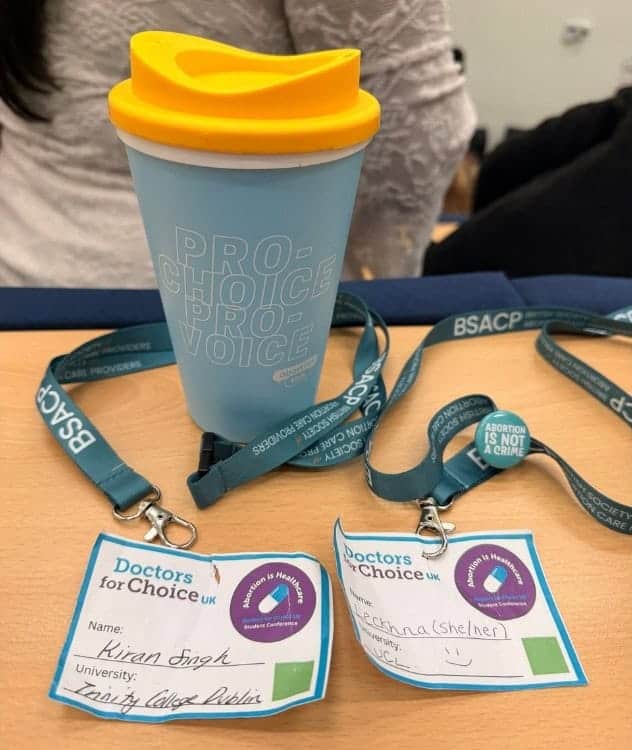
Conference name tags and merchandise from the Doctors for Choice UK Student Conference, “Abortion is Healthcare – An Introduction to Abortion Care for Healthcare Students.” Materials provided by Abortion Talk and British Pregnancy Advisory Service (BPAS).
The morning sessions focused on foundational knowledge about abortion care in the UK. Speakers provided an overview of UK abortion law and the structure of abortion provision, followed by a discussion of the clinical aspects of abortion care. These talks helped contextualize how abortion services are delivered in practice and highlighted the importance of accessible, safe, and compassionate care. Later sessions explored abortion stigma and how healthcare professionals can provide respectful and non-judgmental support to patients. Hearing directly from clinicians and providers working in the field helped illustrate the real-world impact of reproductive healthcare policies and practices.
The conference sessions I enjoyed the most were the afternoon workshops. Participants rotated through three workshops: a practical session on Manual Vacuum Aspiration (MVA), a clinical communication workshop on speaking with patients about abortion, and a creative session titled “Abortion and the Arts.” These workshops offered different perspectives on abortion care – from clinical techniques to patient communication and the cultural narratives surrounding reproductive health. The communication workshop emphasized the importance of empathy, clarity, and respect when discussing sensitive healthcare decisions with patients.
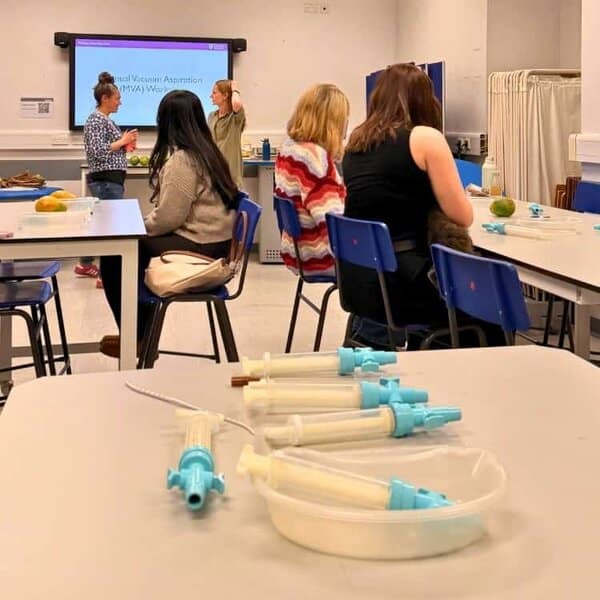
Setup for the Manual Vacuum Aspiration (MVA) workshop at the Royal Free Hospital in London. Participants were introduced to early abortion care techniques in a skills-based session.
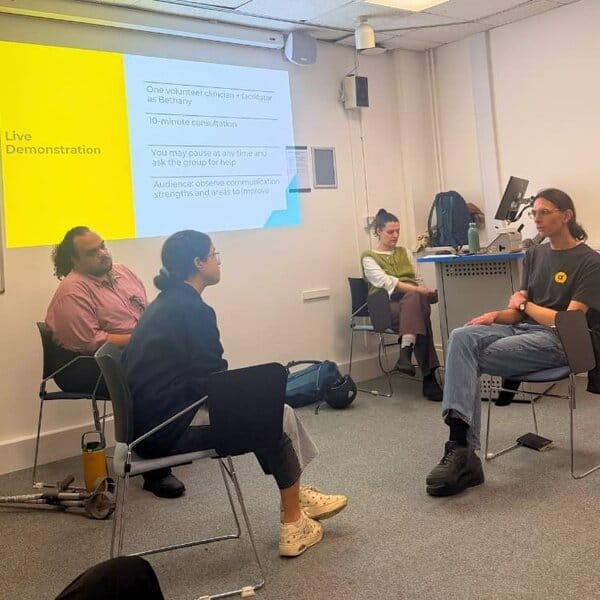
The clinical communication workshop featured a simulated abortion consultation, where students practiced how to approach sensitive discussions with empathy, clarity, and professionalism with peer and facilitator feedback.
One of the most valuable parts of the conference was a providers’ panel and Q&A session that brought together several leading clinicians and advocates working in abortion care, which closed the day. The panel featured several leading clinicians and advocates working in abortion care, including Dr. Patricia Lohr, a U.S. board-certified OB-GYN who previously worked closely with Medical Students for Choice (MSFC) while practicing in the United States and now serves as the Director of Research and Innovation at the British Pregnancy Advisory Service (BPAS). Having the opportunity to hear directly from these providers, many of whom have built their careers in reproductive healthcare, was incredibly meaningful. Bringing together so many key figures in the UK abortion care movement in one room created a rare and valuable opportunity for students to learn from their experiences. Listening to their perspectives on clinical practice, advocacy, and career pathways in this field was deeply inspiring and helped demonstrate the many ways healthcare professionals can contribute to reproductive justice.
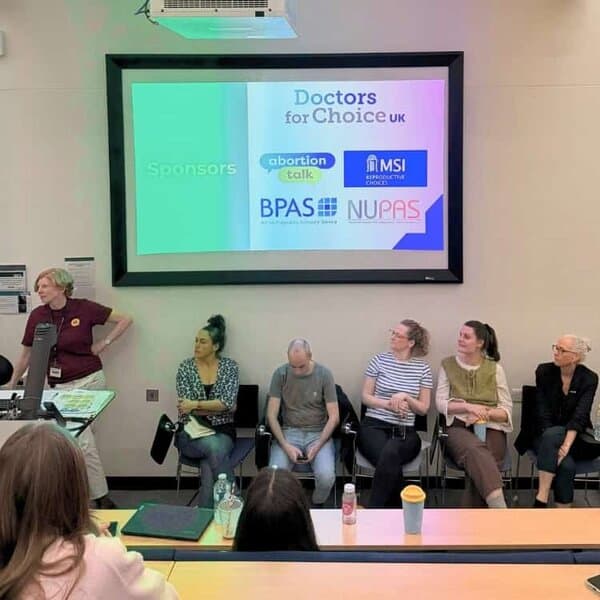
Closing providers’ panel and Q&A at the Royal Free Hospital in London, featured clinicians and advocates discussing abortion care, service provision, patient care, and reproductive health advocacy.
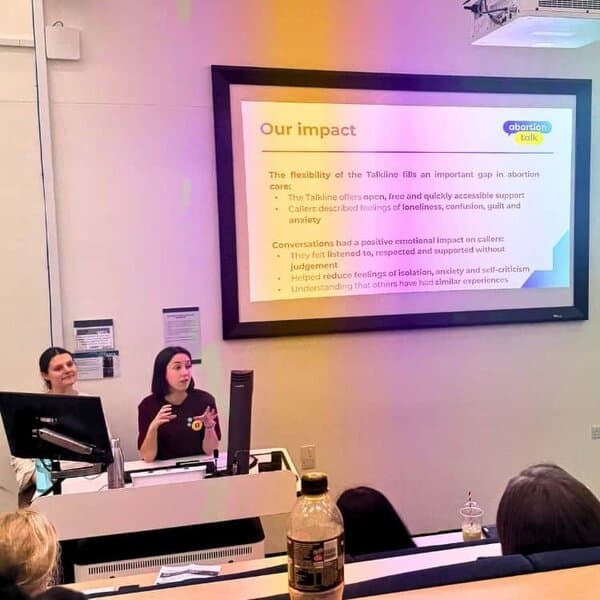
Abortion Talk speakers presented their work in improving abortion education and access, highlighting their initiatives in public engagement, stigma reduction, and supporting informed, patient-centred care.
Another highlight of the conference was the opportunity to connect with other attendees. I had the chance to network with fellow healthcare students who are passionate about abortion care, as well as physicians, educators, and leaders working in reproductive healthcare. Building these connections reinforced the sense that there is a growing community of healthcare professionals committed to improving abortion education and access. In particular, I had the opportunity to speak with Dr. Jayne Kavanagh, Co-Chair of Doctors for Choice UK and Co-Director of Abortion Talk. Our conversation touched on the importance of improving abortion education for healthcare students and the possibility of bringing similar educational opportunities to Dublin. As President of Trinity College Dublin’s chapter of MSFC, I found this discussion especially inspiring. It reinforced the importance of student-led initiatives in improving reproductive health education and reducing stigma within medical training.
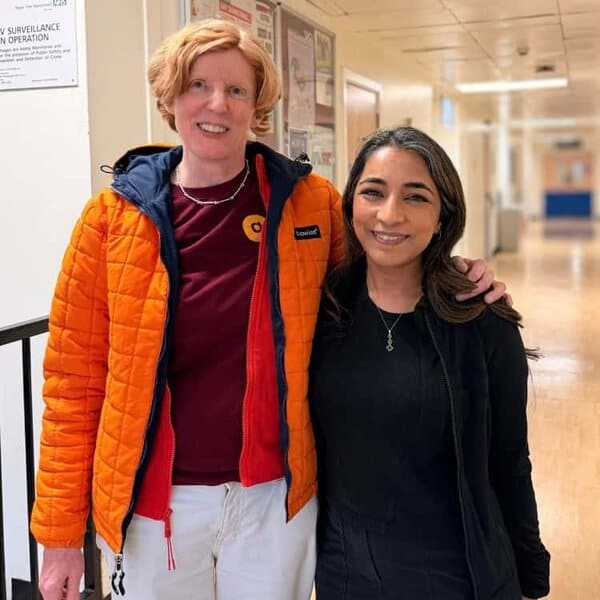
Kiran Singh with Dr. Jayne Kavanagh, Co-Chair of Doctors for Choice UK and Co-Director of Abortion Talk, Associate Clinical Professor (Teaching) at UCL Medical School, and a specialist doctor in sexual and reproductive health in London.
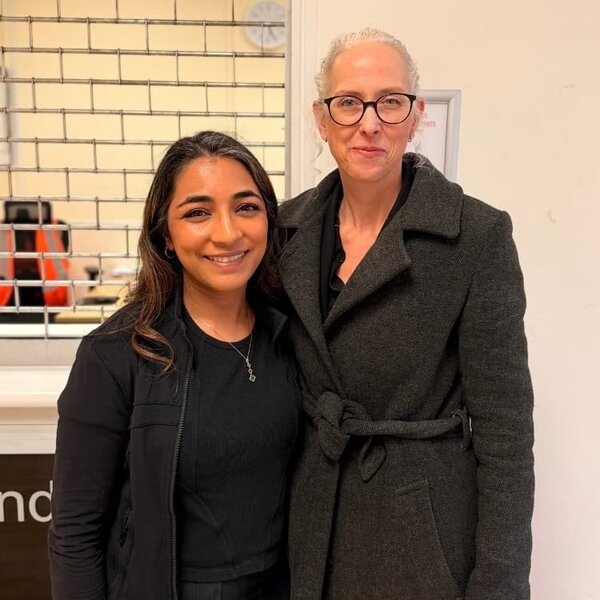
Kiran Singh with Dr. Patricia Lohr, OB-GYN with fellowship training in Complex Family Planning in the United States and Director of Research and Innovation at BPAS.
Overall, the conference provided both practical skills and a broader perspective on reproductive healthcare. I gained a deeper understanding of abortion provision, improved my clinical and communication skills, and learned more about the role clinicians can play in advocating for evidence-based care. These lessons directly apply to my work as an MSFC chapter leader. Organizing educational events, fostering open conversations about reproductive health, and supporting students interested in abortion care are all ways these skills can be brought back to our chapter.
I would strongly recommend this conference to other medical students, particularly those involved with MSFC chapters. It offers a valuable opportunity to learn directly from experienced providers, gain practical skills, and connect with others passionate about reproductive healthcare. Attending the conference reinforced my commitment to improving abortion education within medical training, reinvigorated my interest in becoming an abortion care provider, and created an opportunity to bring some of the ideas and discussions from this event back to the Republic of Ireland.